
Hello friends,
Apparently, being a healthy human in 2026 requires an impressive amount of equipment!
Smart watches, smart rings, smart mattresses, sleep trackers, glucose monitors, meditation apps, gratitude journals, supplement stacks, and perhaps a spreadsheet or two to keep track of it all.
We measure our heart rate variability, count our steps, watch our body temperatures, track our macros, monitor our menstrual cycles, journal about our symptoms, and consult our devices to determine whether we're sufficiently recovered to exercise. We take supplements to improve our sleep, supplements to boost our energy, and perhaps a few more supplements to counteract the side effects of the first supplements.
And when we're not actively monitoring or managing our health, we're scrolling through an endless stream of podcasts, articles, and social media posts telling us what else we should be doing.
It's exhausting. And a little absurd, when you think about it.
Don't get me wrong. I'm all for taking care of ourselves! Modern medicine and technology have given us some incredible tools for understanding and supporting our health. But I can't help wondering whether, somewhere in our quest to become healthier, we've lost touch with something important: the simple, ordinary experience of being alive.
When Health Becomes a Never-Ending Project
We're living in an age of optimization, where seemingly every aspect of our physiology can, and perhaps should, be measured, managed, and improved. Sleep isn't simply something we do anymore. It's a performance, complete with scores, graphs, and recommendations. Movement isn't just about enjoying a walk through the neighborhood. It's about closing our rings. Food isn't merely nourishment, pleasure, or connection. It's an opportunity to manipulate our microbiome, stabilize our blood sugar, reduce inflammation, or maximize longevity.
Even relaxation has become something we're supposed to get better at. Heaven forbid we meditate without checking whether our nervous system responded appropriately.
Of course, there's nothing inherently wrong with wanting to sleep better, eat nutritious food, or stay physically active. The trouble is the cumulative message that accompanies so much of today's wellness culture: You're not quite doing enough. There's always something else to improve. This thing will help. Only 3 payments of $199!
And when we begin approaching our bodies as perpetual improvement projects, even the healthiest habits can become sources of stress.
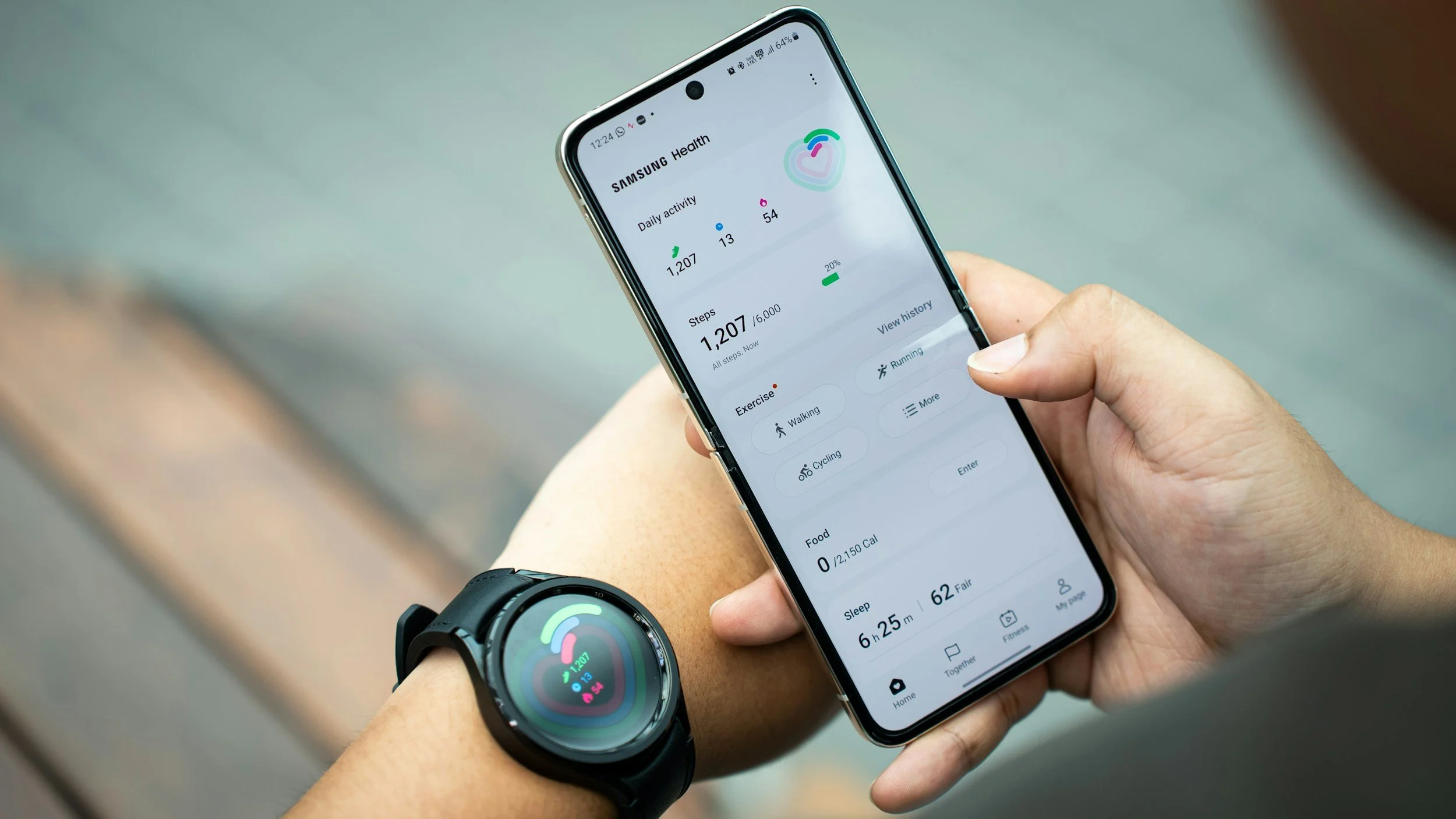
Consider our growing dependence on wearable technology. We’ve got a smorgasbord of biosensors that we can attach to our bodies now! These devices can be genuinely useful, particularly for people managing certain medical conditions or working toward specific fitness goals. But there's a strange irony in needing a device to tell us how we feel.
Imagine waking up after a pleasant night's sleep. You're feeling rested, comfortable, and ready for the day. Then you glance at your smartwatch and discover that your sleep score was abysmal. Apparently, your recovery was poor, your HRV was low, and your body is under considerable stress.
Suddenly, you're questioning whether you're actually tired. Maybe today isn't a good day to exercise. Perhaps you should take it easy. Is something wrong?
A few numbers have managed to override your own lived experience.
I wore either a Fitbit or an Oura ring for many years, but had to finally break up with that technology. For me, it felt like it was not only severing my intuitive connection with my body, but it was also feeding the hypervigilance and anxiety that I was working so hard to rewire.
This is one of the subtler costs of constant tracking. We can become so accustomed to consulting external measurements that we gradually lose confidence in our internal signals. And because biological measurements naturally fluctuate, there's always something new to investigate. Before long, we're not simply observing our bodies. We're supervising them.
The same pattern shows up in our increasingly complicated supplement routines. Spend five minutes on wellness Instagram, and you'll encounter an impressive collection of powders, capsules, tinctures, and mysterious mushroom concoctions promising to improve practically every aspect of human existence. Better sleep! Sharper focus! Balanced hormones! Reduced inflammation! A nervous system that apparently operates like a luxury German automobile!
Some supplements have legitimate medical uses, particularly when addressing documented deficiencies or specific health conditions. I personally take a few intentional supplements every day. But many are marketed with far more confidence than the available evidence supports. In the United States, dietary supplements generally don't undergo the same premarket approval process as prescription medications, and natural doesn't automatically mean harmless. Supplements can have side effects, interact with medications, and sometimes contain ingredients or dosages that differ from what's advertised. Don't even get me started on the new injectable peptide trend…
Yet beyond the physical considerations, there's a psychological cost to continually searching for the next thing that might help. We can begin believing that feeling well depends on finding the perfect combination of products, practices, and protocols. Our kitchen counters start resembling small pharmaceutical laboratories, and our daily routines become elaborate exercises in micromanagement.
What if, instead of continually adding more, we considered what we might be able to let go of?

The Cost of Constant Self-Monitoring
Perhaps the most concerning aspect of this optimization culture is how easily it encourages hypervigilance. When we're constantly monitoring our bodies, we become increasingly practiced at noticing every sensation, shift, and irregularity. We scan for fatigue, evaluate our digestion, assess our mood, and wonder whether that headache was caused by yesterday's meal, last night's sleep, a hormonal fluctuation, or the supplement we started three days ago.
And because the human body is wonderfully complicated, we rarely arrive at a satisfying answer. So we keep investigating.
It's an understandable impulse, especially for those of us who have experienced chronic symptoms, health anxiety, or years of uncertainty about our bodies. When something feels uncomfortable or unpredictable, we naturally want to understand it. We want to know what caused it, what it means, and what we can do to make it better. Researching, tracking, and experimenting can offer a temporary sense of control.
But there's a catch. The more we seek certainty about every bodily sensation, the more intolerable uncertainty can begin to feel. We become increasingly dependent on reassurance, explanations, and external measurements to feel safe. And because absolute certainty about our health is impossible, the search never really ends.
For people experiencing neuroplastic symptoms or conditions involving nervous system sensitization, this pattern can be especially relevant. Our brains are constantly learning from what we pay attention to and how we interpret our experiences. When bodily sensations repeatedly become the focus of fear, monitoring, and urgent problem-solving, those patterns of attention and threat perception can become increasingly automatic. In some cases, this can contribute to the amplification or persistence of very real physical symptoms.
This doesn't mean symptoms are imaginary, that every condition is neuroplastic, or that people are responsible for making themselves unwell. It simply means that the relationship between attention, perception, and the body is far more dynamic than we often realize.
And sometimes, the very things we do to feel better can inadvertently keep us entangled in the experience of feeling unwell.
There's another dimension to this that I think deserves more attention: how easily the pursuit of health can become a form of self-obsession.
I don't mean narcissism or vanity. I mean the exhausting habit of making ourselves the constant subject of our own attention. How am I feeling? Why am I feeling this way? Am I improving? Am I doing enough? What should I change?
It's possible to become so consumed with monitoring and improving ourselves that we gradually lose touch with the people, experiences, and activities that make life meaningful.
Our world gets smaller, often as our efforts to improve our health grow larger.
There's an important distinction between caring for ourselves and constantly checking on ourselves. Paying attention to persistent or concerning symptoms and seeking appropriate medical care is an essential part of looking after our health. But not every fluctuation is a problem, not every sensation requires an explanation, and not everything meaningful about our well-being can be captured on a graph.
Sometimes, the most helpful thing we can do is allow our bodies to be bodies: imperfect, variable, occasionally uncomfortable, and not always in need of our intervention.
I also wonder what we're losing as our relationship with health becomes increasingly digital. More and more, we look to apps, algorithms, and online experts to tell us when to eat, when to move, when to rest, how to breathe, and whether we're stressed. We consume endless wellness content, compare ourselves to strangers, and encounter algorithms that seem remarkably skilled at identifying new things we should worry about.
The more health content we consume, the more problems we may discover that we didn't know we had. And the solutions, conveniently, are often just one click away.
It's a peculiar contradiction of our modern life. We have access to more health information than any generation before us, yet that abundance of information doesn't necessarily translate into greater peace of mind. Sometimes, it simply gives us more things to think about, more decisions to make, and more opportunities to question whether we're doing enough.
Meanwhile, life is happening outside the screen.
There's sunlight filtering through the trees, the satisfaction of preparing a delicious meal, the pleasure of moving our bodies in ways we enjoy, the warmth of a conversation with a friend, and the delight of laughing so hard we forget what we were worried about. There are books to read, gardens to tend, songs to sing, places to explore, and people to love.
None of these experiences require a subscription, a dashboard, or a personalized protocol.

Reclaiming a Simpler Way of Living
Perhaps that's where we might begin reclaiming a simpler relationship with our health. Not through another elaborate routine or a strict digital detox, but through small, ordinary moments of disengagement from the constant project of self-improvement.
Maybe we leave the watch at home for a walk. Eat a meal without analyzing its nutritional properties. Go to bed without worrying about tomorrow's sleep score. Take a break from wellness podcasts. Spend an afternoon gardening, reading, playing music, whittling wood, or visiting with friends without wondering whether the activity is improving our nervous system.
Maybe we allow ourselves to feel tired without immediately investigating why, or have an anxious day without assuming something has gone terribly wrong. We might even rediscover the pleasure of doing something simply because we enjoy it, rather than because it's good for us.
Imagine that!
For those of us who have spent years navigating chronic symptoms or health anxiety, this shift may feel particularly unfamiliar. When so much of our attention has been devoted to figuring out what's wrong and how to fix it, stepping away from that pursuit can feel uncomfortable, even irresponsible.
But we don't have to wait until every symptom has disappeared, every question has been answered, or every health concern has been resolved before allowing ourselves to participate in life.
And perhaps that's one of the most liberating realizations of all: We can care for our health without making our health the center of our lives.
None of this requires us to reject science, abandon medical care, or pretend that our choices don't influence our health. It's simply an invitation to reconsider how much of our attention, energy, and precious time we're willing to devote to managing ourselves.
Our bodies have been regulating, adapting, repairing, and responding to the world long before we had the technology to monitor their every move. They aren't perfect, and sometimes they need medical support, treatment, and care. But they're also remarkably capable of navigating the ordinary fluctuations of being human without our constant supervision.
Perhaps trusting the body doesn't mean believing we'll always feel wonderful or that nothing will ever go wrong. Perhaps it means recognizing that we don't have to control every variable to live a meaningful, satisfying life. We can make reasonable choices about our health without turning those choices into rigid rules. We can seek help when we need it without making our symptoms the center of our identity. And we can care deeply about our well-being while allowing our attention to rest on other things.
After all, health was never supposed to be the main event. It's one part of a much larger, richer, messier human experience.
So here's a gentle invitation to put down the phone, take off the watch occasionally, close a few browser tabs, and step away from the endless stream of advice about how to become a better-functioning human.
Go outside. Call someone you love. Make something with your hands. Listen to music. Get lost in a good book. Do something wonderfully unproductive.
Not because these things will optimize your health, but because your life is happening right now, and you deserve to be here for it.

XO, Mel
Certified Health Coach, Reiki Master/Teacher, and Pain Reprocessing Therapy Practitioner
Come connect with me on Instagram and Insight Timer
Ready to Step Off the Self-Improvement Treadmill?
If you're tired of constantly monitoring, managing, and trying to improve yourself, my five-day audio course, Nothing to Fix: Escaping the Trap of Self-Improvement, offers a gentler way forward. Together, we'll explore how to loosen the grip of overthinking, self-fixing, and the endless search for answers- and begin reconnecting with the life that's already here, waiting to be lived.
Explore Nothing to Fix on Insight Timer Plus→
Explore Nothing to Fix on my website→