
What If Healing Isn’t About You All the Time?

Hi friends,
I’ve often talked about one of my turning points happening not when I learned a new tool, started a new routine, doubled down on my meditation, or read another book. It’s actually when I gave myself permission to stop doing so much. And started shifting my focus outside of myself.
At some point on a recovery or healing journey, something subtle can start to happen.
You begin with the best intentions- understanding yourself, feeling better, healing what hurts. You read the books, learn the tools, notice your thoughts, track your emotions, maybe even keep tabs on your body sensations.
You’re “doing the work.”
And yet… somehow, you feel more stuck.
A little more tired.
A little more in your head.
A little less connected to life.
If that resonates, you’re not doing anything wrong. You may have just reached the point where self-awareness needs a partner: engagement with the world beyond you.
When Self-Awareness Turns Into Self-Absorption
Self-reflection is powerful- until it quietly becomes your default setting.
It can start to look like:
Constantly checking how you feel
Analyzing every thought or reaction
Monitoring symptoms, moods, or progress
Feeling like you always need to be “working on yourself”
For people navigating anxiety, depression, OCD, or chronic symptoms, this inward pull can be especially strong. When something feels off in your mind or body, of course your attention goes there.
But here’s the paradox: the more time you spend focused on yourself, the more central your inner experience becomes.
What started as awareness can slowly turn into a loop.
The Quiet Pressure to Always Be Improving
We also live in a culture that subtly tells us: “You should always be growing, healing, optimizing.”
And while that can be inspiring, it can also turn life into a never-ending self-improvement project.
You might feel like:
You can’t relax until you’ve figured everything out
Every discomfort needs immediate attention
You should always be doing something “productive” for your healing
At some point, your inner world starts to feel like a full-time job… with no weekends.
From a Buddhist perspective, this is another form of grasping- holding tightly to the idea of “me and my experience,” while trying to control or perfect it. Even the desire to fix yourself can reinforce the sense that something is wrong.
And sometimes, the way out isn’t more effort- it’s a gentle loosening.
Your Brain Listens to Where You Look
There’s also something very practical happening beneath the surface.
Your brain is constantly learning from where you place your attention. Particularly if there is an emotional charge attached to it.
If your attention is mostly on your thoughts, your symptoms, your feelings, your progress, your brain starts to prioritize those things. It tags them as important. It keeps bringing them back.
Not because you’re doing anything wrong- but because attention + emotion teaches the brain what to repeat.
So while it can be helpful to notice what’s happening inside you, it’s not helpful to stay there all day!
You don’t have to analyze every thought or decode every sensation. You can notice something, question the story your mind is telling about it, and then gently choose where your attention goes next.

The Relief of Turning Outward
This is where a simple but powerful shift comes in.
Not ignoring yourself.
Not suppressing what you feel.
But expanding your focus beyond it.
Instead of asking, “How am I feeling right now?” for the tenth time today, you might ask:
“What’s happening around me?”
“Who can I connect with?”
“What can I engage with, even a little?”
In Buddhist practice, turning toward others through compassion and loving-kindness is not just a moral ideal- it’s a way of loosening the tight grip of self-focused suffering.
And modern psychology echoes this: well-being is deeply tied to connection, contribution, and meaning- not just self-understanding.
You Don’t Have to Feel Better First
One of the biggest misconceptions in recovery is: “I’ll engage with life once I feel better.”
But often, it works the other way around. Engaging with life is part of what helps you feel better.
You don’t need perfect energy, perfect mood, or a quiet mind to:
Send a thoughtful message or silly photo
Sit with someone you care about
Listen to another person’s story
Share a laugh or a moment of presence
These moments don’t erase what you’re feeling- but they change the landscape. They create space around it.
Staying With Yourself- But Not Stuck There
This isn’t about abandoning your inner world. It’s about just not getting stuck there. You can acknowledge what’s happening inside you without making it the center of your entire day.
It might sound like:
“I feel anxious/tired/uncomfortable. {shrug} Okay.”
“That doesn’t mean something is wrong or that I’m failing.”
“I can still take a small step outward.”
You’re not forcing anything. You’re just widening the frame.
The Power of Small, Human Moments
Turning outward doesn’t have to be big or overwhelming- especially if you’re already feeling depleted.
Start small:
Notice the environment around you
Make eye contact or smile at someone
Ask a genuine question and really listen
Do something kind, even quietly
Share a simple activity with someone
Send a note/text/postcard
These moments gently interrupt the loop of self-focus. They remind your brain:
“There is more to life than this.”
And often, they bring a sense of ease that hours of introspection cannot.
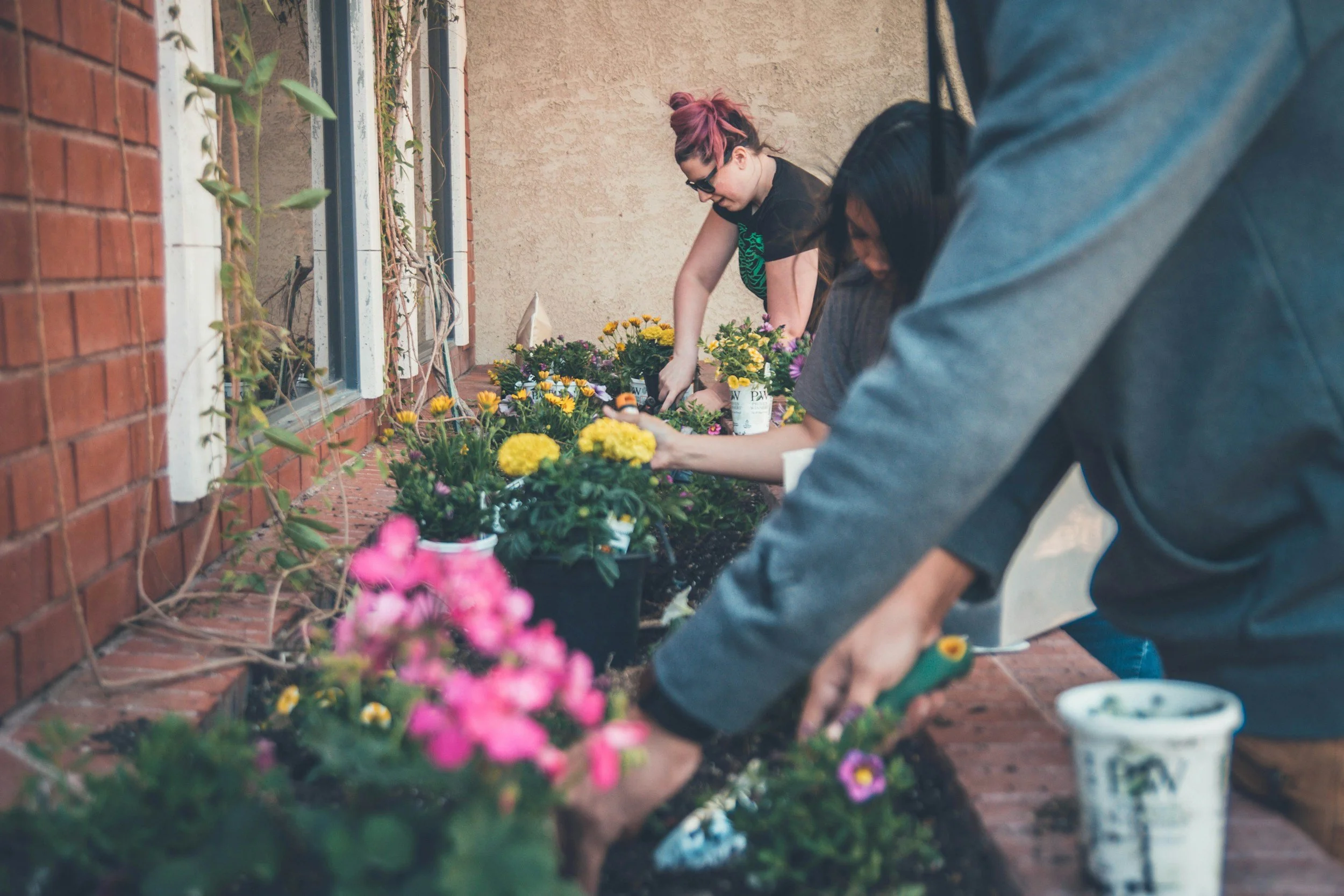
Community as Medicine
One of the quiet limitations of modern self-help culture is how individual it can be. It often frames healing as something you do alone- in your thoughts, your routines, your personal practices. But humans are relational beings. We regulate, grow, and heal in connection.
Community offers:
Perspective (you’re not the only one navigating this)
Support (you don’t have to carry everything yourself)
Joy (shared experiences matter more than we think)
Meaning (being part of something larger than yourself)
Sometimes the most healing thing isn’t another insight- it’s simply being with other people.
Practical Ways to Gently Shift Outward
If this all sounds good in theory but hard in practice, here are a few simple, doable ways to start:
1. Set “Check-Out” Moments
If you notice yourself checking in with your body or thoughts frequently, try setting a gentle limit. For example: “I’ll acknowledge how I feel- and then shift my attention for the next 10 minutes.” This builds flexibility without forcing anything.
2. Use Your Senses to Anchor Outward
Pick one sense- sight, sound, or touch- and spend a few minutes focusing on what’s around you. The color of the sky, the sound of birds, the feeling of your feet on the ground. This helps your attention land outside your internal loop.
3. Do One Small Act of Kindness Daily
Nothing elaborate- just something simple. Send a kind text, hold the door, leave a thoughtful comment. Acts of kindness naturally pull your focus outward, boost your mood, and lay the potential for community-building.
4. Schedule Low-Pressure Connection
If socializing feels like a lot, keep it light. A short phone call, sitting with someone while doing your own thing, or even being in a shared space can help you reconnect without overwhelm.
5. Ask More Questions Than You Answer
In conversations, gently shift your focus to the other person. Get curious about their experience. This takes the spotlight off your internal state and opens up connection.
6. Create “No Analysis” Windows
Give yourself permission to take breaks from self-reflection. Even an hour where you’re not trying to figure anything out can be surprisingly freeing.
A Gentle Reframe
If you’ve been spending a lot of time in your head, there’s nothing wrong with you.
It means you’ve been trying.
It means you care.
It means you want to feel better.
Now, you might just be ready for the next step.
Not more effort.
Not more analysis.
Just a small shift in direction.
The Paradox of Freedom
Here’s the quiet paradox:
When you stop making yourself the center of your attention, you often feel better. Not because your inner world disappears- but because it’s no longer the only thing in view.
The grip softens.
The space widens.
Life feels a little more open.
Closing Thoughts
You don’t need to stop growing. You don’t need to stop caring about your healing. Just hold it more lightly.
You are not a project to be completed. You are a person who deserves to live life.
So look up.
Reach out.
Let yourself be part of the world again- even in small ways.
You might find that what you’ve been searching for inside…is actually out there.
Wishing you many moments of beauty and connection,

xo, Mel
Certified Health Coach, Reiki Master/Teacher, and Pain Reprocessing Therapy Practitioner
Come connect with me on Instagram and Insight Timer