

Hi friends,
One summer day, several years ago, I had a first date planned- a lovely picnic in a local Denver park. I was feeling pretty good that morning- just the normal level of nerves any of us might experience- and was looking forward to meeting someone new and soaking in the beautiful weather and good food. However, I left the house behind schedule, ran into unexpected traffic on the way, and also had a miscommunication about where exactly in the park we were meeting. With every minute that I was late, I could feel the anxiety rising. I was rushing to get there, gripping the steering wheel. My head started pounding, I felt hot and itchy, the dizziness and nausea reared up, my legs turned to jelly. By the time I finally sat down on the picnic blanket, I was a mess of symptoms and panic, and did not put my best foot forward on that date. Understandably, there wasn’t a second.
This was the day I realized that rushing was a major trigger for my anxiety and neuroplastic symptoms, and I’ve thought about it many times since!
This is just one specific example, but most of us know what it’s like to experience the stress of rushing or urgency. If your default walking speed is “power-walk with purpose,” and your brain narrates life in a constant to-do list, you’re not alone. Many of us live as though someone’s standing behind us with a stopwatch. We rush through breakfast, rush through traffic, rush through healing, and- ironically- rush through mindfulness practices designed to help us slow down.
But here’s the quiet truth: your nervous system wasn’t designed for the pace of modern life. It’s still wired like your ancestors’- who never had to “multi-task” while checking Slack, stirring soup, and trying to do vagus nerve toning. When we live in a chronic state of hurry, we’re teaching our body that life is an emergency.
The Neuroscience of Hurry
From a brain-based perspective, rushing keeps your system in sympathetic dominance- the “fight or flight” branch of your autonomic nervous system. It’s not just stress; it’s physiology. Every time you feel that subtle urgency- tightness in your chest, shallow breath, jaw clenching, the sense that there’s never enough time- your brain interprets it as danger.
When you rush, your amygdala lights up like a car alarm, scanning for threats that don’t actually exist. Your hypothalamus cues the adrenal glands to pump out cortisol and adrenaline, and your body gets the message: We’re running from a threat. Even if the “threat” is just your overflowing inbox, dinner that needs cooking, or laundry that needs folding.
Over time, this becomes your baseline state. The nervous system, ever adaptable, wires around repetition. If you spend your days sprinting through tasks, your brain normalizes it. “This,” it decides, “is what safe feels like.” Except it’s not safety- it’s survival mode wearing a productivity badge.
The trouble is, your parasympathetic system- the part that handles digestion, immune repair, and emotional regulation- can’t fully come online when you’re rushing. The body can’t distinguish between being late for a meeting and being chased. Both trigger the same physiological cascade. It’s why people with anxiety or neuroplastic conditions (chronic pain, fatigue, gut issues, etc.) often feel worse when they’re overscheduled. Their already sensitized systems are pushed further into overdrive.
The Eastern View: When Doing Becomes a Disease
In Buddhism, one of the main causes of suffering is craving- that constant grasping for what’s next (remember the second noble truth from my last blog). In Taoism, the antidote is wu wei, or “effortless action”- doing without forcing. Both traditions point toward the same truth: trying to get somewhere faster often takes us further away from what we’re actually seeking.
Rushing is a form of craving. It’s the mind saying, “If I can just finish this one more thing, then I’ll relax.” But that moment never comes. As soon as you reach one imaginary finish line, your brain invents another. You become a hamster on a spiritual treadmill.
Zen teachers sometimes call this the “disease of busy.” It’s not about how much you’re doing, but how much you’re clinging to the feeling of doing. Busyness becomes an identity- a way to avoid stillness, uncertainty, or emotional discomfort. If you’re always moving, you don’t have to feel what’s underneath.
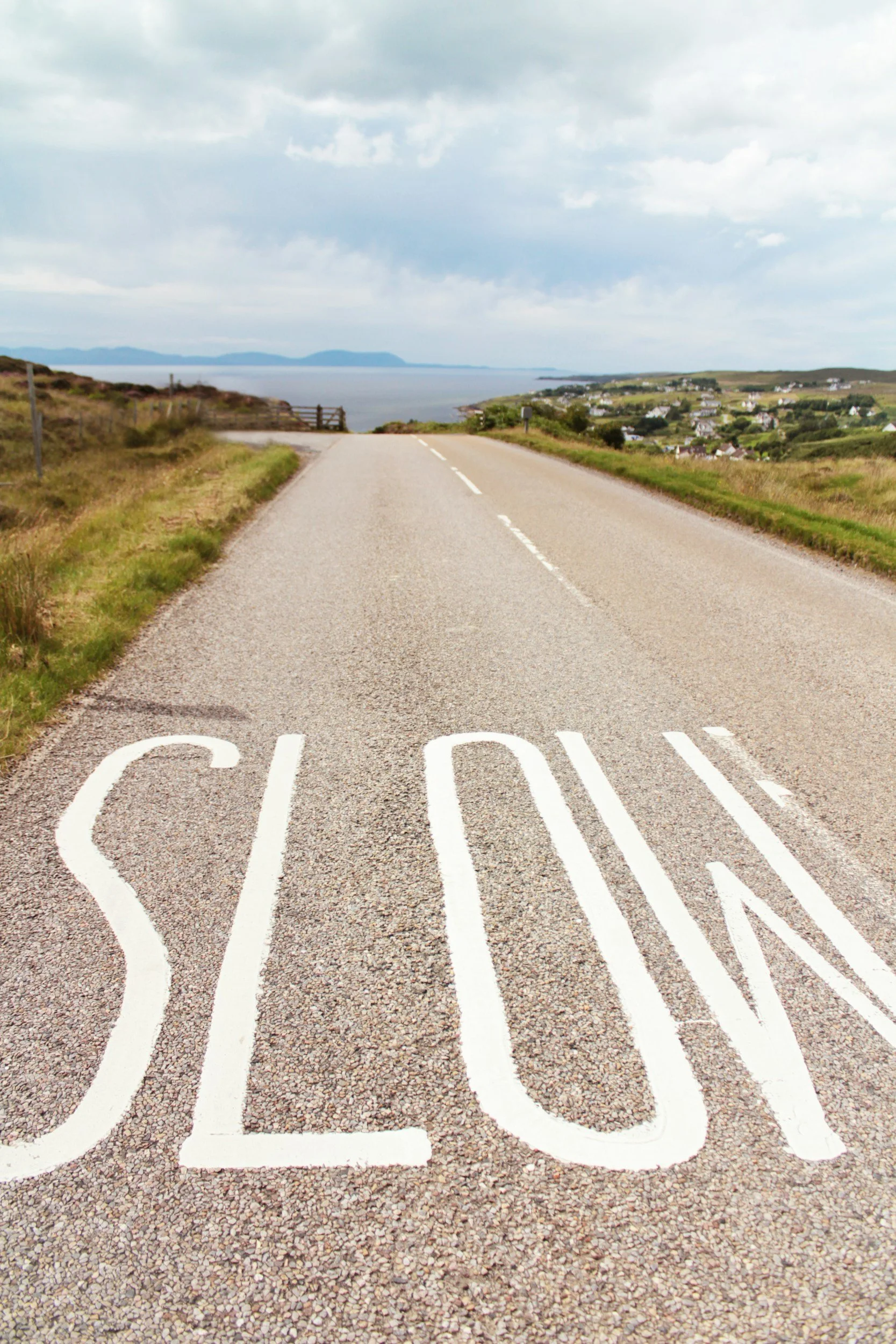
Why We Rush (Even When We Don’t Want To)
Rushing is rarely logical. It’s a survival strategy- a nervous system’s attempt to stay one step ahead of danger. For many of us, that danger isn’t external but emotional: fear of failure, rejection, guilt, or the dreaded feeling of “not enough.”
When your body learned early on that slowing down meant vulnerability or criticism, you may have built an internal belief: “If I keep moving, I’ll stay safe.” Your adult nervous system still runs that old code, even if your rational brain knows better.
In essence, rushing is a protective reflex. It’s not who you are- it’s what your body learned to do.
What Rushing Costs You
Living in perpetual hurry has real physiological consequences:
Shallow breathing keeps CO₂ and O₂ levels out of balance, making you lightheaded or anxious.
Digestive slowdown (because “now’s not the time to eat, we’re fleeing!”) can lead to bloating, IBS, or reflux.
Muscle tension becomes chronic; your neck stiffens, and your shoulders live up near your ears.
Emotional bandwidth shrinks; you become reactive, impatient, and forget why you walked into rooms.
And perhaps the most painful cost: you lose contact with the present moment- the only place your body can actually feel safe.
The Science of Slowing Down
Thankfully, your brain is as capable of rewiring toward calm as it was toward chaos. The antidote to rushing isn’t more time management; it’s nervous system retraining. Here’s how you can begin:
1. Name the Urgency
Next time you catch yourself power-walking to the bathroom like it’s an Olympic event, pause and say internally, “This is urgency, not truth.”
This simple label interrupts the automatic loop between thought and physiology, allowing the prefrontal cortex to come back online.
2. Let Your Body Lead
Instead of thinking your way into calm, let your body signal safety first. Try this:
Loosen your jaw and exhale slowly.
Drop your shoulders as if setting down a heavy bag.
Feel your feet make contact with the floor.
This tells your nerves, “We’re safe now.” The body listens before the mind does.
3. Check Your Inputs (They Matter More Than You Think)
Sometimes our nervous system isn’t just reacting to thoughts- it’s reacting to chemistry and environment. A few small shifts can make a big difference:
Caffeine: That third cup of coffee might feel like focus fuel, but to your adrenal system it’s more like pouring gasoline on an already smoldering fire. Try switching to green tea, herbal tea, or even half-caf if you’re not ready to break up completely.
Blood Sugar: Skipping meals or living off snack bars keeps your blood sugar bouncing, which your brain reads as instability. Steady meals = steady mood = less internal rushing.
Music & Media: Fast-paced playlists, intense podcasts, and doomscrolling all feed urgency. If you can, balance your day with slower tempos, nature sounds, or instrumental tracks that cue your body toward parasympathetic rest. (Come learn more about how to rewire your brain with music/sound in my newest course!)
Lighting & Environment: Bright overhead lights, clutter, or background noise can subtly cue your system to stay “on.” Soften your surroundings where possible. You’re not being precious- you’re being neurobiologically savvy.

4. Practice Single-Tasking
When you eat, just eat. When you walk, just walk. Neuroscience calls this “attentional training”; Zen monks call it “washing the bowl.”
Either way, it reconditions your brain to tolerate presence without needing constant stimulation.
5. Play With Time
Experiment with arriving somewhere ten minutes early or doing one thing at 80% speed or even half-speed. Brushing your teeth. Driving. Cooking. All your daily activities. Notice the discomfort that arises. That edge- that itchy, “I should be doing more!” feeling- is where rewiring happens.
When you can stay present in that gap, your nervous system learns that slowing down is safe.
6. Reclaim the Pause
Eastern philosophy celebrates the space between- the breath between notes, the silence between thoughts. Designers and artists call this the “white space.”
Try inserting micro-pauses into your day: before you open a new tab, answer a text, or speak. It’s astonishing how these small moments re-anchor your system in parasympathetic rest.
7. Humor Your Inner Sprinter
Your rushing habit isn’t evil; it’s adorable in its own way. It’s your brain trying to help- just very inefficiently.
When you catch yourself rushing to relax (“I’m going to meditate so hard!”), laugh gently. Humor disarms the nervous system faster than self-criticism ever will.
Slowness as a Superpower
When you slow down, you’re not being lazy- you’re recalibrating. You’re teaching your system that safety isn’t on the other side of accomplishment; it’s here, in the inhale you almost skipped.
Your prefrontal cortex, the part responsible for emotional regulation and executive function, thrives in slower rhythms. When you move through life more deliberately, you gain access to creativity, compassion, and perspective- qualities that simply don’t exist in fight-or-flight.
Buddhist teacher Thich Nhat Hanh gave us the invitation: “When walking, walk. When eating, eat.” Presence isn’t just a spiritual virtue; it’s a practical nervous system setting.
And paradoxically, when you stop rushing, you often get more done. Not because you’re trying harder, but because your attention is coherent. You’re no longer scattering energy across ten tasks; you’re directing it like sunlight through a magnifying glass.
Final Thoughts
Rushing is a nervous system habit- a conditioned pattern, not a personality flaw. It’s your body’s way of trying to help you feel in control. But when you learn to slow down- to honor the natural pace of your breath, your digestion, your emotions- you reclaim more than calm. You reclaim choice.
So next time your brain says, “Hurry up,” try whispering back, “I’m already where I need to be.”
And if you need a mantra, make it this:
“Rushing won’t make this better. I choose to move at the speed I need.”
Take a breath. Then take another.
Welcome back to the present.
Here’s to taking life a little more slowly.
Thanks for reading.

xo, Mel
Certified Health Coach, Reiki Master/Teacher, and Pain Reprocessing Therapy Practitioner
Come connect with me on Instagram, Insight Timer, and YouTube